The CDJ-1500X and XDJ-AN land a week apart to near-unanimous criticism. Strip the loudest complaints back to the spec sheet, and the units seem to be documenting something larger than themselves: a change in what a DJ unit is, and who it is for.
When the CDJ-1500X and XDJ-AN were announced within a week of each other, the response across the DJ forums was immediate and close to unanimous:
The gear was a downgrade. The pricing was an insult. The company was lost.
Among the most repeated objections was that both units had been saddled with USB-C power - a fragile connector, the argument ran, that a stray boot or a bumped cable could pull mid-set, killing the track and the booth’s confidence with it. It is a fair objection. It is also, for one of the two units, simply not true.
The CDJ-1500X is not USB-C powered. AlphaTheta’s own specification lists an AC adapter and a DC barrel connector, the same broad approach the CDJ line has used for years. The USB-C ports on the 1500X carry data, not power. The unit that does take USB-C power is the XDJ-AN, and there the concern has real teeth. What happened is worth naming plainly, because it happens frequently: a legitimate criticism detached from the product it applied to and drifted onto the more visible, more disliked one. The complaint was true. It was just aimed at the wrong deck.
This is not a point scored at the community’s expense. However it is one of the reasons the reaction should be analysed. Outrage travels faster than a spec sheet, and when two products land together and one becomes the lightning rod, the accurate criticisms of one can get absorbed into the other. Therefore, before the sentiment can be trusted, it has to be sorted.
This becomes easier when you notice: reaction hardened with distance from the gear and softened with proximity to the manufacturer. The harshest verdicts came from people reacting to 3D renders. Those who spent time on the gear came away measurably warmer, not converted but specific about what worked and what did not. Warmer still were the trade reviewers - whose coverage the community reads (not without reason), as softened by the commercial relationships that keep ad revenue flowing. Neither pole is truth, but the pattern is instructive.
What people are actually mourning #
If we, instead of focusing on a single complaint, look at the reaction as an indication, we notice that the main concern is rarely stated outright because it is more felt than argued. It is not about any one missing feature.
It is about what kind of object a DJ unit is becoming.
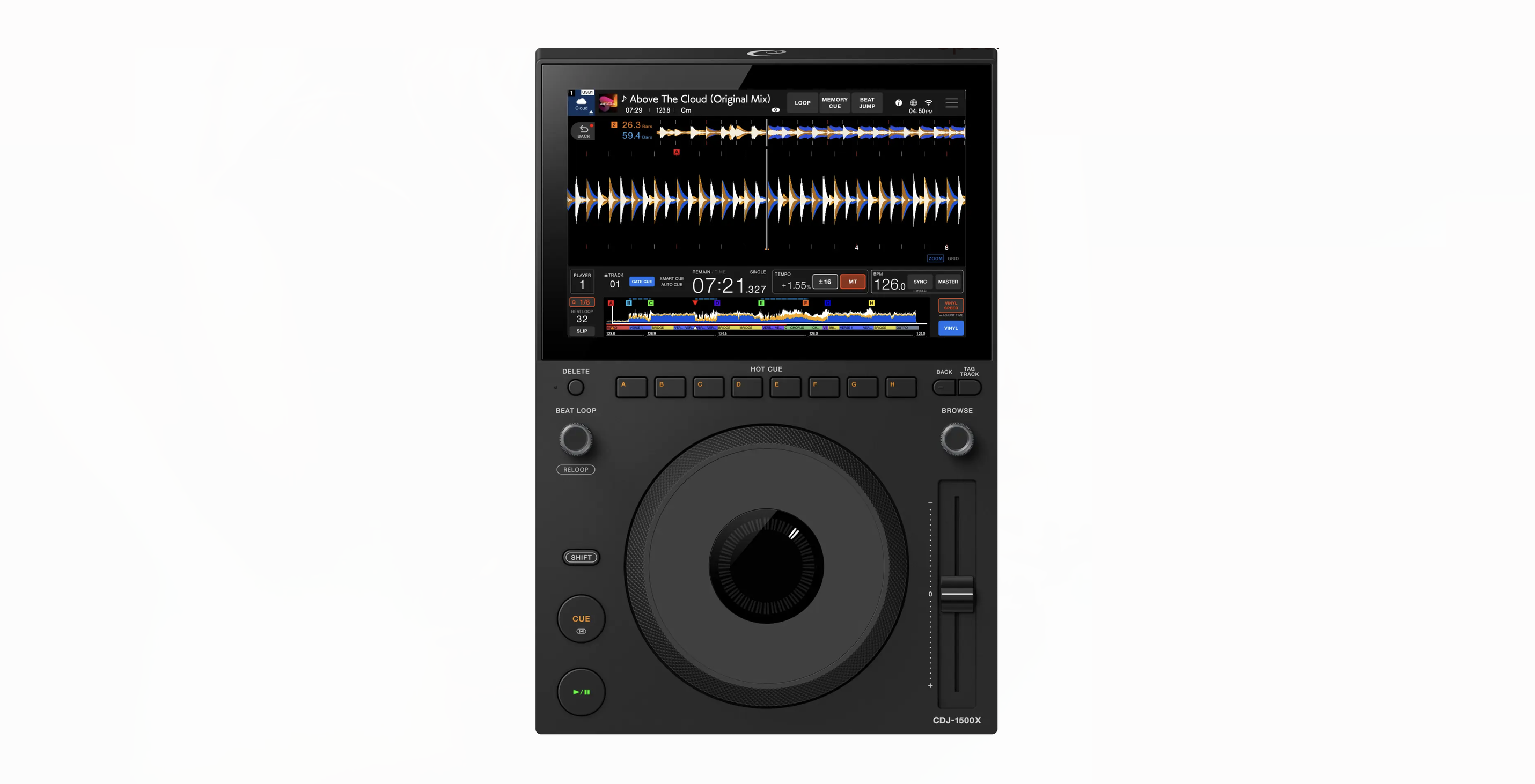
A DJ deck used to be an instrument you could play by touch alone. A dark club dictates controls living as tactile, the work muscle memory and ear, the DJ’s eye on the floor. Both new units move a large share of that control onto the touchscreen. Functions are now menu items you have to look at to find. AlphaTheta frames this as progress, describing the 1500X as letting professional features “be condensed into a compact unit.” The community seems to experience the same change as a loss. That gap - between the efficiency sold and the tactile change (no longer) felt - is the whole story.
A number of DJs asserted the XDJ-AN had dropped its Sound Color FX. It has not. The spec sheet lists six, the same set as the flagship all-in-one above it. What changed is that functions moved behind the screen. Those DJs were not misreading the spec. They were reading the deck the way a player reads an instrument, by its control surface. When a feature loses its physical control it stops feeling like it exists - because on something you play by feel, existence and access are the same thing. The error is the argument itself: move enough of a deck behind glass and, in practice, the function has been lost.
Judged against a past role #
If that is indeed what DJs are mourning, the next question is - why does it land as betrayal rather than mere preference? AlphaTheta’s product pages answer: both units are marketed for homes, bars, lounges and the step up from a controller, not for one below flagship club booth. The endlessly asked “who is this for?” is explicitly stated the box.
For roughly a decade, the mid-tier’s unspoken job was to prepare you for the club. You bought a mid-priced standalone so that when you walked up to a booth full of flagship CDJs, the layout was familiar and your hands already knew where to go. These releases are pitched at a different buyer. Could it be that critics are measuring the CDJ-1500X and XDJ-AN against a job AlphaTheta has stopped claiming it does? The mismatch between old expectation and new positioning is where the heat emanates from.
The loudest complaint was again the price outrage - the “AlphaTax” refrain - that trails every release. Strip it back and we notice that users are still paying roughly the same money, but feeling they are receiving less features. The design language confirms the target the pricing implies. Optional wood side panels and a menu of front-panel LED colours are furnishings for a lounge, not tools for a working booth.
Cutting both ways #
An honest assessment must grapple with two conflicting realities; resisting the urge to simply dogpile requires a bit of nuance.
First, if the hardware is truly as compromised as forums claim, why do so many stay? Defenders argue that AlphaTheta’s dominance rests on rugged reliability and entrenched club infrastructure, making a switch to cheaper rivals logistically daunting for promoters. Conversely, repair technicians increasingly report cheaper internal components and declining build quality. Both cannot be entirely true. Either the durability moat remains intact, or the brand is coasting on fading past glory - an interesting tension.
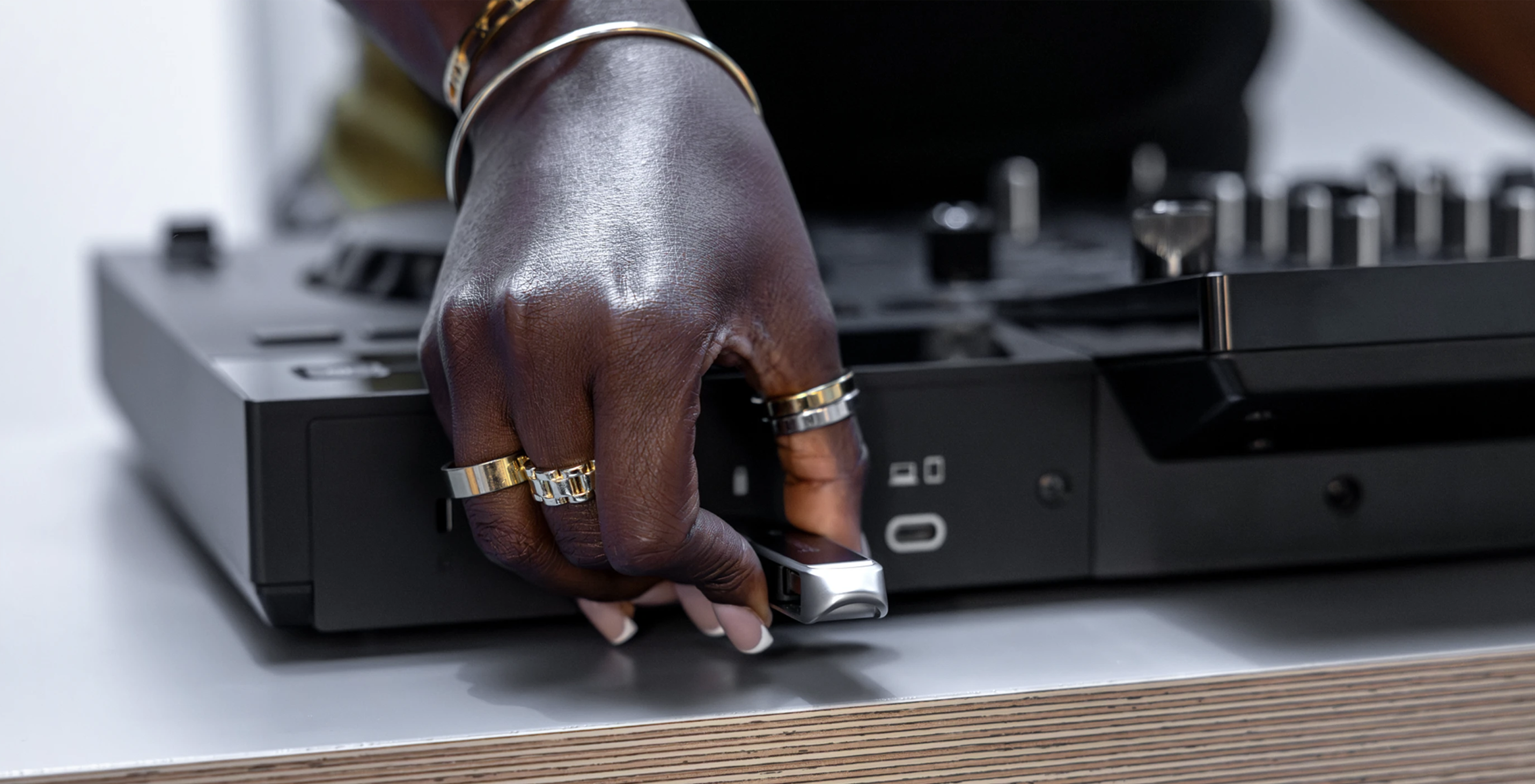
Second is the accusation that AlphaTheta is forcing a subscription model. While technically an overstatement for the present - core XDJ-AN performance remains free via a rekordbox hardware unlock - it accurately reflects the company’s trajectory. Cloud-first framing, paywalled crowd-request features, and a solitary, rear-mounted USB-C storage slot on the XDJ-AN all point to a clear shift. That single port eliminates the seamless drive-swapping essential to back-to-back DJ handoffs, sacrificing a core social workflow for negligible manufacturing savings. It isn’t an economy measure; it’s a deliberate nudge toward the cloud. Framing this shift as a completed transition is premature, but recognising it as the inevitable destination is simply paying attention.
A new branch #
Ultimately, these units document a fundamental structural shift in the product ecosystem. The most consequential critique - is that if mid-tier gear drastically diverges from flagship layouts, the traditional upgrade path collapses.
Historically, the mid-tier served as a stepping stone, bridging the gap between bedroom controllers and club-standard booths by building familiar muscle memory. However, a mid-tier unit that operates like an entirely different instrument ceases to be a stepping stone; it becomes a separate destination.
This is not just a story about unpopular hardware, but about the change in the DJ progression ladder. By replacing that crucial middle rung with devices that teach entirely different habits, the familiar pathway is broken. The CDJ-1500X and XDJ-AN did not single-handedly cause this shift, but they are its clearest symptoms to date. The noise of the initial outrage will soon fade, but the new direction it signals will permanently reshape the landscape.